
News
The circular economy and the rental of furniture
27/02/2019








The circular economy is characterized in that it provides a multitude of mechanisms of value creation not linked to the consumption of finite resources. It is in this sense that the famous Swedish furniture chain is going to offer, from now on, the possibility of renting furniture. The new business model is based on treating products that were always consumer goods as a service. Thus, when the contract stipulates or the client wishes, the rented furniture will be returned and after a process of restoration, it will be placed in the market again, thus extending its use and increasing the productivity of those resources. The first test that will be made by the furniture and household items chain will be in February 2019 in Switzerland will be carried out with different types of furniture.
The circular economy differs from the linear model established after the industrial revolution of the 19th century in that it seeks economic, ecological and social benefit. It seeks to recover the awareness that all actions generate impacts on the global system of which we are part. Part of the importance of preserving and improving natural capital, intelligently managing the finite stocks and balancing the flows of renewable resources. In order to make this possible, it is essential that the products are designed to allow their correct maintenance, restoration or the recovery of materials with all their functionality when this is no longer possible.
The strategy of Ikea is framed in these principles in that it is in line with the will of the brand to turn around in the traditional business of furniture sales opting for rental as a commitment based on usability. Torbjörn Lööf, Managing Director of Inter Ikea, the franchise manager of this furniture giant, explains it with the following words: “In this way, instead of discarding the furniture items, we can restore them and sell them again, extending the life cycle of the products”.
And with regard to kitchen furniture, he reflected about the circular economy. “In this case, it could be said that rental is alternative way of financing a kitchen. When this model of circular economy starts up, we not only focus on selling a product, but on observing what happens when a client has it for a time and how they preserve it”. This has resulted in Ikea kitchens currently being designed considering the possibility, for example, of being able to change the doors, and preserving the rest of the unit. This would involve a very significant reduction of waste.”
En esta línea, Ikea también contempla lanzar su propio negocio de repuestos para que los clientes puedan comprar piezas de muebles que han quedado descatalogados, alargando así su vida útil. La marca sueca también ha emprendido en algunos países iniciativas para promover el reciclaje de madera y otros productos como colchones.
In this line, Ikea is also studying launching its own spare parts business so that the customers can buy furniture parts that have been discontinued, thus extending their useful life. The Swedish brand has also undertaken initiatives in some countries to promote the recycling of wood and other products such as mattresses.
Proposals such as the one presented by Ikea are very important because the traditional construction, based on the linear model of economy (produce, use and discard) has had and has great weight in climate change, generation of waste and the depletion of finite resources. This is why it is important, and also urgent, that builders begin the work taking into account the principles of the circular economy. Construcía is a pioneer in the application of circular economy to construction.
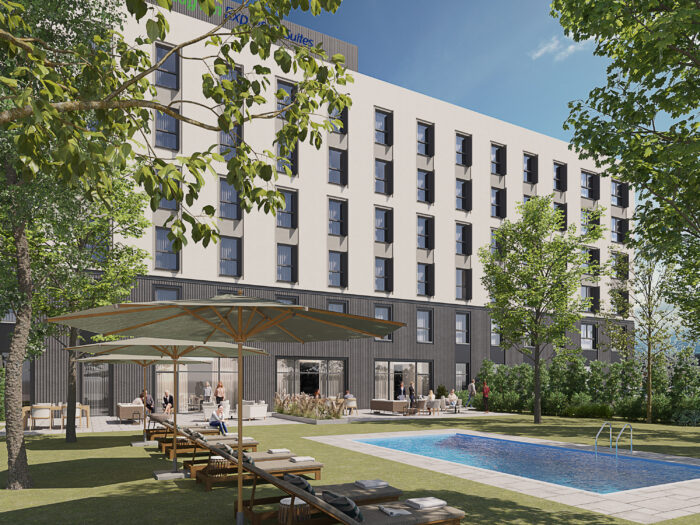
Grupo Construcía completes the structure of the Holiday Inn Sabadell promoted by Europa-Center Iberia
Circular Construction
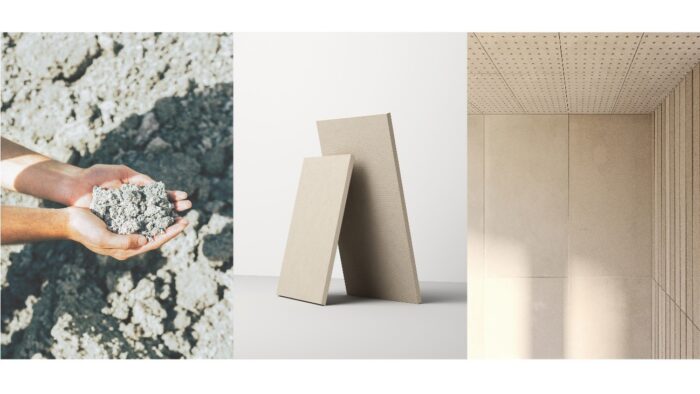
El CDTI invierte junto con Grupo Construcía, Meroil, Nolabey Grup y Evolvia en una empresa referente en revalorización de residuos de celulosa, Honext Materials, S.L.
Lean
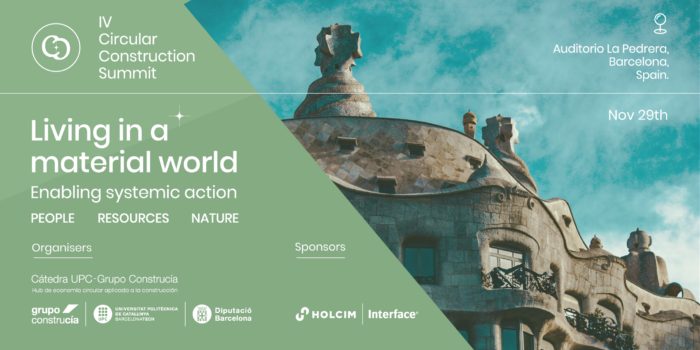
El IV Foro de Construcción Circular se celebrará en Barcelona para abordar los desafíos del entorno construido a nivel internacional
Circular economy
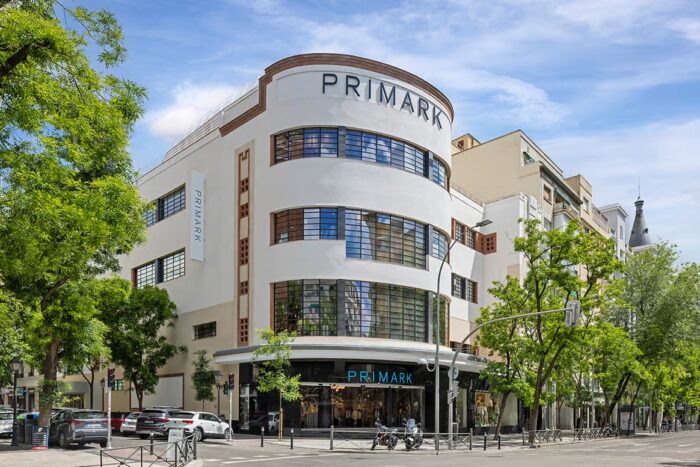
Primark confía en Grupo Construcía para su más reciente apertura en el barrio Goya de Madrid
Retail
Políticas de suficiencia: rehabilitar antes que construir
Circular Construction
Grupo Construcía y Hilti unen fuerzas para avanzar en la construcción sostenible
Colaboración
Transforma tu espacio de trabajo en un entorno saludable y sostenible
Circular Construction

5 claves para alinear la construcción con la Taxonomía Europea
Circular economy

Los grandes hitos del 2023 en la evolución hacia una construcción positiva para el futuro
Circular economy

COP28: entre el avance histórico y las lagunas críticas
Uncategorized

Suscríbete a nuestra newsletter para saber más sobre nosotros
