
News
The university and the circular economy
15/01/2019








There is no doubt that the circular economy is the model to make possible a future of abundance and well-being for all. Governments, companies and organizations work intensely throughout the world to accelerate its implementation. At the individual level there is still much work to be done. The change of mentality that involves passing from a “consumer” model to a “user” model is something that is not achieved only with the force of the law or private promotion. Not at least at the necessary pace. In addition, this change will only be possible if the suitable professional profiles exist; therefore, the involvement of the school and university is crucial in the training environment.
At the international level, there exist numerous initiatives such as that of the elite athlete, Ellen McArthur, which we already spoke of in this article and who, with the foundation that bears her name, is committed to maximizing the value of the materials. She has signed agreements with multinationals such as Google and its foundation is the co-creator of a course on circular economy at Delft University of Technology. Other higher educational centres of Germany include in their formal programs training in circular economy.
Now in Spain, there are also several universities that have included, among their subjects and training programs, credits relating to learning about the circular economy. The Master’s degree in Industrial Engineering of the University of Seville includes the subject “Circular Economy and Sustainability”, the University of Nebrija has organized various conferences about this economic model, as has the University of Burgos.
But the one that has gone the furthest is the University of Oviedo, which toward the end of last year, announced it would create the department of circular economy with the aim of raising awareness and training in the area of waste materials as well as promoting R+D for its management.
The University of Santiago de Compostela has also taken significant steps with the creation of the 1st International innovation and circular economy research award. An award granted in the framework of the Master’s degree in Economic Development and Innovation (DEIN) and financed by the Provincial Council of A Coruña.
Formal training: The great challenge to achieve
With the exception of the subject taught at the University of Seville, most university centres centre on hosting conferences and offering non-formal courses and trainings. The great challenge to achieve is for all this learning to be based on qualifications and on official subjects.
With this, two objectives are achieved that are essential and of priority:
How to ensure technical quality in an area that is so recent and in formation?
It is fundamental to go to the sources. It is true that the Circular Economy has popularized in the last 5 years, but it is a concept that has already existed from several decades, although it was not called by this name. One of its parents is Walter Stahel, a Swiss architect who, in the 1970s, published a reported titled “The potential for substituting energy with labour” that questioned the linear model that would lead to destroying the planet and bet on ingenuity to repair products instead of creating new ones.
Since then work has been done to reach that goal called Circular Economy, which has made use of tools such as Biomimicry, the science that seeks to emulate nature with the purpose of finding practical solutions to the needs of the world; and of others more known such as C2C® (Cradle to Cradle®), a transversal vision that looks at health and potential recirculation of materials, use of resources in the production process and respect for people.
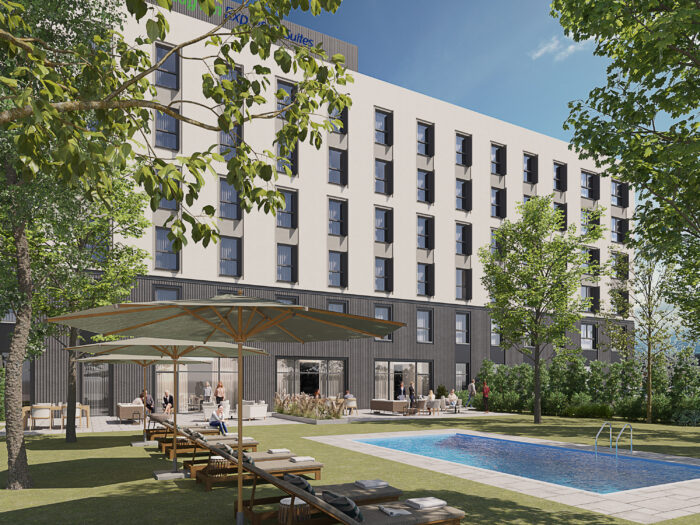
Grupo Construcía completes the structure of the Holiday Inn Sabadell promoted by Europa-Center Iberia
Circular Construction
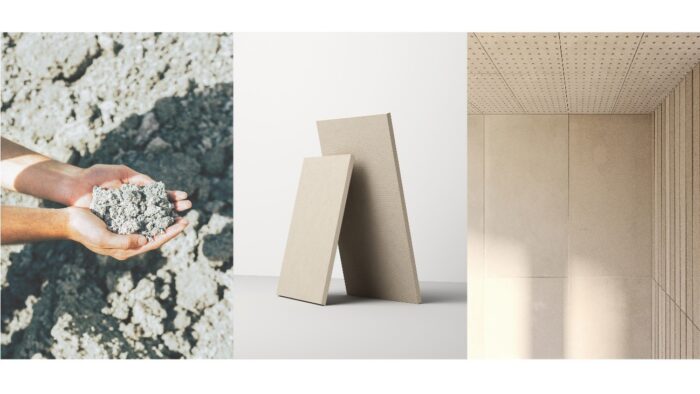
El CDTI invierte junto con Grupo Construcía, Meroil, Nolabey Grup y Evolvia en una empresa referente en revalorización de residuos de celulosa, Honext Materials, S.L.
Lean
El IV Foro de Construcción Circular se celebrará en Barcelona para abordar los desafíos del entorno construido a nivel internacional
Circular economy
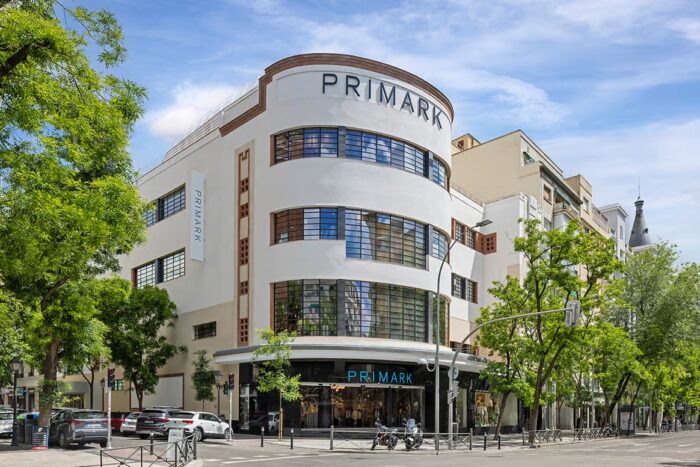
Primark confía en Grupo Construcía para su más reciente apertura en el barrio Goya de Madrid
Retail
Políticas de suficiencia: rehabilitar antes que construir
Circular Construction
Grupo Construcía y Hilti unen fuerzas para avanzar en la construcción sostenible
Colaboración
Transforma tu espacio de trabajo en un entorno saludable y sostenible
Circular Construction

5 claves para alinear la construcción con la Taxonomía Europea
Circular economy

Los grandes hitos del 2023 en la evolución hacia una construcción positiva para el futuro
Circular economy
COP28: entre el avance histórico y las lagunas críticas
Uncategorized

Suscríbete a nuestra newsletter para saber más sobre nosotros
